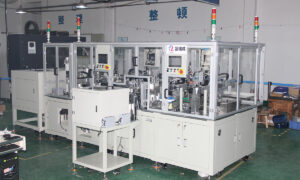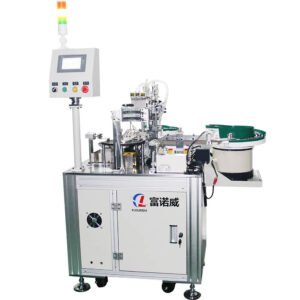
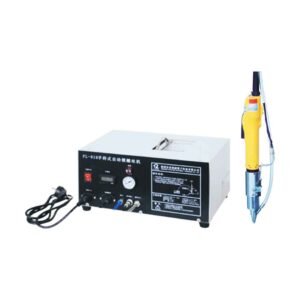
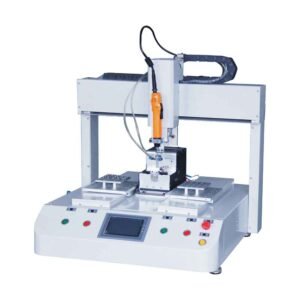
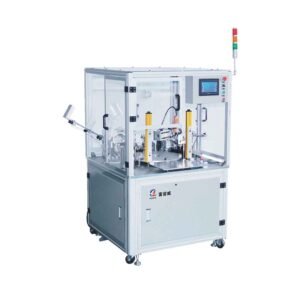
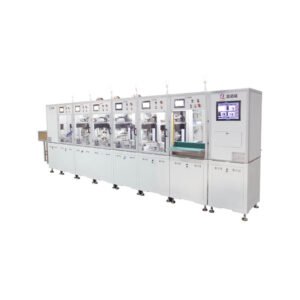
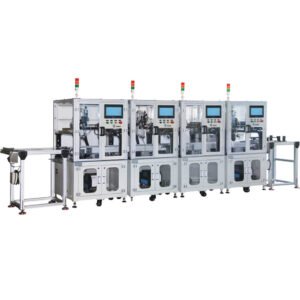
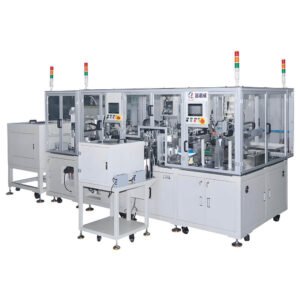
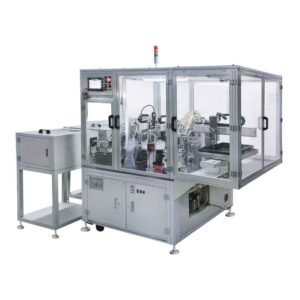
Automatic Heatsink Screw Fastening Machines
Efficient and precise screwing solutionsfor heatsink and transistor assembly
- High Automation — Replaces 8–10 Operators
- Up to 98% Yield in Screw Fastening & Forming
- Compatible with heatsink sizes/ multi-screw patterns
0
+
Production Base
We are located in Baoan, Shenzhen
0
+
Hero Customer
Our equipment is widely praised
0
+
Engineering Team
Ensuring Your Zero Downtime
0
+
Patent Certificate
Powering Precision Automation
What is a Heatsink Automatic Screw Fastening Machine?
When heatsinks are fastened by hand, the process often looks simple—but in real production it brings hidden risks: operators must align parts, pick and feed screws, and control tightening “by feel,” which makes torque, depth, and seating consistency hard to repeat. As output ramps up, variation between shifts can lead to common issues such as loose screws, over-tightening, stripped threads, tilted seating, and occasional missed screws—problems that directly affect thermal contact, reliability, and downstream rework. In contrast, a heatsink automatic screw fastening machine standardizes the entire sequence by combining precise positioning, automatic screw feeding, and controlled torque/depth tightening, so every unit is assembled to the same spec with stable cycle time. With built-in monitoring and optional in-line checks (OK/NG judgement, traceability, vision/height verification), it reduces human error, improves fastening consistency, and supports scalable, repeatable manufacturing for high-power electronics assemblies.
Manual Fastening
- Low initial cost
- Flexible for small batches / frequent changeovers
- Simple setup,minimal equipment
- Inconsistent torque & seating (operator dependent)
- Higher risk of loose screws, over-tightening, strippedthreads,missed screws
- Slower cycle time; fatigue increases defects over long shifts
- Hard to verify and trace results consistently
Automatic Fastening
- Stable torque/depth control for consistent clamping force
- Faster, repeatable cycle time; less labor dependence
- Lower defect rate and more predictable quality across shifts
- Higher initial investment
- Requires fixtures/program setup and maintenance
How Heatsink Automatic Screw Fastening Works
Step1
Auto Feeding & Singulation
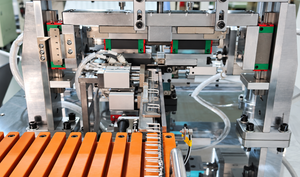
Automatically feeds and orients heatsinks, screws, insulation pads, and IGBT devices from trays/bowls, then singulates parts into a stable one-by-one flow for the next station. This reduces manual handling and ensures consistent part presentation and cycle time.
Step2
Automated Dispensing
A metered dispensing unit applies thermal grease or adhesive in a programmable pattern with controlled volume and placement accuracy. Recipe-based parameters ensure repeatable coverage and stable thermal contact for downstream assembly.
Step3
Insulation Pad Placement
The system automatically picks and places the ceramic or polyimide insulation pad onto the heatsink interface area, ensuring accurate alignment and full surface contact. This step prevents electrical shorting between the power device and heatsink while maintaining stable thermal conduction for consistent assembly quality.
Step4
IGBT Pick-and-Place & Alignment
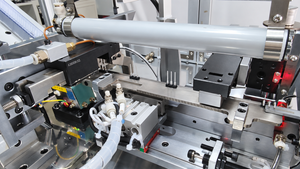
A robotic gripper picks the pre-formed IGBT (with leads bent 90° upward) and places it onto the insulated heatsink interface with controlled Z-height and precise alignment. By referencing the fixture datum (and optional vision guidance), the system ensures correct lead orientation and consistent seating before screw fastening.
Step5
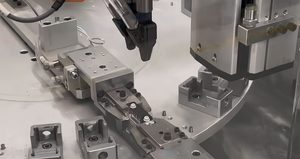
Automatic Screw Fastening
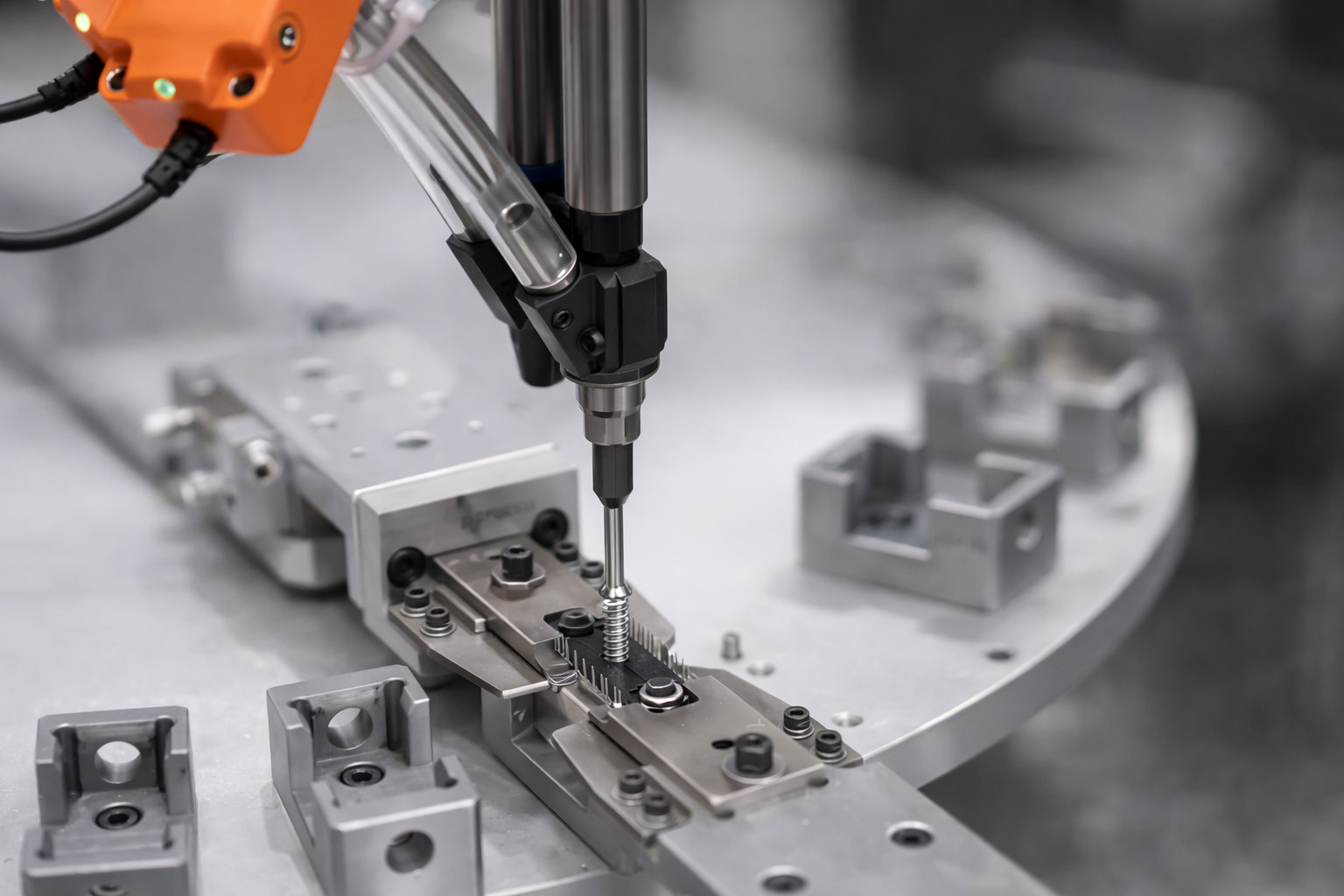
An automatic screwdriving unit feeds and tightens screws with controlled torque (optional angle/depth) to deliver consistent clamping force between the device and heatsink. This reduces defects such as loose screws, over-tightening, stripped threads, and tilted seating, ensuring stable fixation and reliable thermal contact.
Step6
Vision Check & Alarm
An integrated vision system inspects critical assembly points—component presence, pad alignment, device orientation, and screw seating—against predefined tolerances. Any out-of-spec condition is flagged immediately with an OK/NG result and an alarm signal to isolate the unit for rework, with optional result logging for traceability.
Step7
Auto Feeding & Singulation
After fastening is completed, a mechanical gripper picks the finished heatsink assembly from the fixture and transfers it to an output tray, placing each unit into defined pockets for neat, stable arrangement. The tray pattern and indexing can be configured to match different heatsink sizes and downstream handling requirements.
Where Heatsink Screw Fastening Is Used
EV Charging & Power Electronics
Solar Inverters & Renewable Energy
Industrial Automation & Motor Drives
Data Center & UPS Power
Telecom & Network Power Systems
Power Supply Manufacturing
Our cases
Select a product
4-Step Free Sampling|Confirm Results Before Ordering
Step 1|Send Requirements & Sample Info
Share component type, forming specs/dimensions, tolerance, and target output (drawings/photos/videos welcome).
Step 2|Engineering Review & Proposal
We verify key specs and recommend the right model and configuration.
Step 3|Free Sample Test / Video Demo
We run a free sample test and provide clear photos/videos for your approval.