
- Industry News
Electronic Components Purchasing Guide for Procurement Managers
- By tian81259@gmail.com
In many manufacturing companies, electronic components are the backbone of the finished product—but for procurement managers, they are also a complex, high-risk spend category. Between fast product lifecycles, supply constraints, quality issues, and price volatility, managing this category well can directly impact your company’s profitability and delivery performance.
This guide walks through the basics of electronic components from a procurement perspective:
- What types of components you’ll typically buy and what they do
- How to define clear technical and commercial requirements
- Where to source them and how to evaluate suppliers
- Key brands you’ll encounter
- Why you should also pay attention to electronic component forming machines and other supporting equipment in your sourcing strategy
1. Major Types of Electronic Components and Their Functions
From a purchasing standpoint, it’s useful to group components into a few large categories. This helps with supplier segmentation, price benchmarking, and risk control.
1.1 Passive Components
Resistors
- Function: Control current, divide voltage, set bias, pull-up/pull-down in digital circuits.
- Common types: Thick-film chip resistors, wirewound power resistors, precision metal-film resistors, and axial/radial leaded resistors for through-hole assembly.
- Procurement notes: Look at tolerance (±1%, ±0.1%), temperature coefficient, power rating, and package (e.g., 0603, 0805, axial).
Capacitors
- Function: Energy storage, filtering, decoupling, timing, and power-factor correction.
- Common types: MLCC (ceramic), electrolytic (aluminum, polymer), film capacitors, tantalum capacitors.
- Procurement notes: Capacitance value, voltage rating, ESR, temperature range, and safety approvals (e.g., X/Y safety caps in power supplies) matter.
Inductors & Magnetics
- Function: Energy storage in power conversion, filtering, EMI suppression.
- Common types: Power inductors, common-mode chokes, RF inductors, transformers.
- Procurement notes: Inductance, current rating, core material, DCR, and safety/regulatory requirements.
1.2 Active Components
Semiconductors (Discrete)
- Function: Rectification, switching, protection, signal control.
- Common types: Diodes (rectifier, Schottky, TVS), MOSFETs, IGBTs, BJTs.
- Procurement notes: Voltage and current ratings, Rds(on), switching speed, package type (TO-220, TO-247, SMD), and thermal performance are crucial.
Integrated Circuits (ICs)
- Function: Provide complex functions—power management, microcontrollers, communication, analog front ends, etc.
- Categories:
- Power ICs (DC-DC converters, drivers, controllers)
- MCUs/MPUs
- Analog ICs (op-amps, comparators, ADC/DAC)
- Interface ICs (USB, CAN, RS-485, Ethernet, etc.)
- Procurement notes: Lifecycle status (active/NRND/EOL), lead time, supplier reference design availability, and counterfeit risk are key issues.
1.3 Connectors and Interconnect
Connectors
- Function: Provide mechanical and electrical connection between boards, cables, and modules.
- Types: Board-to-board, wire-to-board, I/O connectors (USB, HDMI), power plugs, RF connectors.
- Procurement notes: Current rating, mating cycles, locking mechanism, and compatibility with housing and cable assemblies.
Cables, Harnesses, Terminals
- Function: Power and signal transmission.
- Procurement notes: Wire gauge, insulation material, flame rating (UL), and assembly standards.
1.4 Electromechanical Components
Relays, Switches, Fans, Buzzers
- Function: Mechanical switching, user interface, thermal management, and signaling.
- Procurement notes: Mechanical lifetime, environmental rating (IP), safety certifications, noise level (for fans), and availability of equivalents.
2. How to Define Your Component Requirements
For procurement managers, the biggest risk is buying parts that are technically “almost right” but not fully compatible with design, process, or compliance needs. A good specification goes far beyond just part number and price.
2.1 Start from the Approved Vendor/Part List (AVL/APL)
Most engineering teams maintain an Approved Vendor List (AVL) or Approved Part List (APL). Make this your starting point:
- Confirm internal part number and BOM revision.
- Check if multiple manufacturers are approved for the same spec (second sources).
- Clarify which parameters are critical (must-match) vs. optional (nice-to-have).
2.2 Clarify Electrical and Environmental Requirements
Work closely with R&D or hardware engineers to understand:
- Voltage, current, and power ratings
- Tolerances, temperature range, derating rules
- Noise, ripple, EMI/EMC requirements
- Any industry standards: UL, IEC, automotive (AEC-Q), medical standards, etc.
Many purchasing mistakes happen when a part meets the headline numbers (e.g., 25 V, 100 µF) but fails on ESR, ripple current, or temperature performance.
2.3 Consider Assembly Process and Packaging
This is where procurement often overlooks an important topic: how the components are actually mounted and processed on the line.
Key factors:
- SMT vs. THT (through-hole) vs. mixed assembly
- Tape & reel, tube, tray, bulk packaging
- Special lead forming requirements
- Sensitivity to moisture (MSL) and handling
For through-hole components such as resistors, diodes, and radial capacitors, manufacturing often requires pre-forming and cutting the leads before insertion. If your factory uses automated insertion or semi-automatic assembly, you may also need to consider electronic component forming machines (lead forming and cutting machines) as part of your broader sourcing strategy.
These machines:
- Cut and bend component leads to precise lengths and angles
- Adapt components (e.g., axial resistors, radial capacitors) to match PCB hole patterns
- Improve consistency and insertion efficiency compared to manual bending
- Reduce the risk of lead stress, component damage, and soldering defects
As a procurement manager, understanding these process requirements helps you:
- Purchase components in compatible lead and packaging formats, and
- Evaluate whether investment in or upgrades to electronic component forming equipment could reduce labor cost and scrap in the long term.
3. Where to Purchase Electronic Components
Sourcing channels can significantly affect availability, quality, and price. A balanced strategy usually uses more than one type of supplier.
3.1 Franchised Distributors
Examples: large international distributors and regional authorized agents.
Pros:
- Guaranteed authenticity and traceability
- Access to full documentation, reference designs, and technical support
- Better alignment with manufacturer warranties and design support
- Generally stable supply and structured pricing
Cons:
- Less flexibility on special deals for small quantities
- Some line cards are restricted by region or application
Use franchised distributors for:
- Critical ICs and power devices
- Safety-related components
- New designs where long-term supply is important
3.2 Direct from Manufacturers
For high volume or strategic components (e.g., MOSFETs, MLCCs, connectors used across many SKUs), direct cooperation with component manufacturers can be attractive.
Advantages:
- Better volume pricing and long-term supply agreements
- Early access to new products and engineering support
- Customization options (e.g., special leads, marking, packaging)
Challenges:
- Higher MOQs and longer negotiation cycles
- Requires stronger internal forecasting and inventory management
3.3 Independent Distributors and Brokers
These suppliers fill gaps when parts are on allocation, discontinued, or in shortage.
Pros:
- Access to hard-to-find or EOL components
- Negotiable pricing and flexible MOQs
Risks:
- Higher risk of counterfeits and mixed-lot quality
- Limited traceability and inconsistent documentation
Mitigation strategies:
- Use brokers only for non-safety-critical parts or short-term support
- Require incoming inspection, X-ray, or electrical testing
- Work with certified labs for authenticity verification if needed
3.4 E-Commerce and Online Platforms
B2B platforms and manufacturers’ online stores can help for sampling, engineering builds, and urgent small quantities.
Use cases:
- Rapid prototyping and pilot runs
- Low-volume, high-mix production
- New supplier exploration
From a procurement standpoint, they are best used as a complement, not a full replacement for structured distributor or manufacturer relationships.
4. Common Brands You’ll See in BOMs
The “right” brand depends on your industry (consumer, industrial, automotive, medical, etc.), but these names appear frequently in global supply chains:
4.1 Passive Components
- Resistors: Vishay, Yageo, KOA Speer, Panasonic
- Capacitors: Murata, TDK, Nichicon, Rubycon, Panasonic, KEMET
- Inductors/Chokes: TDK, Coilcraft, Würth Elektronik, Bourns
4.2 Semiconductors
- Analog & Power ICs: Texas Instruments, Analog Devices, Infineon, STMicroelectronics, ON Semiconductor, Microchip
- MCUs & MPUs: STMicroelectronics, NXP, Microchip, Renesas
- Discrete Power Devices: Infineon, STMicroelectronics, Vishay, ON Semiconductor, ROHM
4.3 Connectors & Electromechanical
- Connectors: TE Connectivity, Molex, Amphenol, JST, Phoenix Contact
- Relays & Switches: Omron, Panasonic, Hongfa, TE Connectivity
From a purchasing perspective, it’s good practice to:
- Track brand-level dependence in spend reports.
- Encourage engineering to qualify functionally compatible alternatives from at least two brands where possible.
- Maintain a clear map of which brands are critical to which product families.
5. Don’t Forget Process Equipment: The Role of Electronic Component Forming Machines
While your main focus is often on materials (components themselves), your plant’s efficiency and quality also depend heavily on capital equipment that handles those components. One often-overlooked category is electronic component forming machines, used in through-hole and mixed-technology production lines.
5.1 What These Machines Do
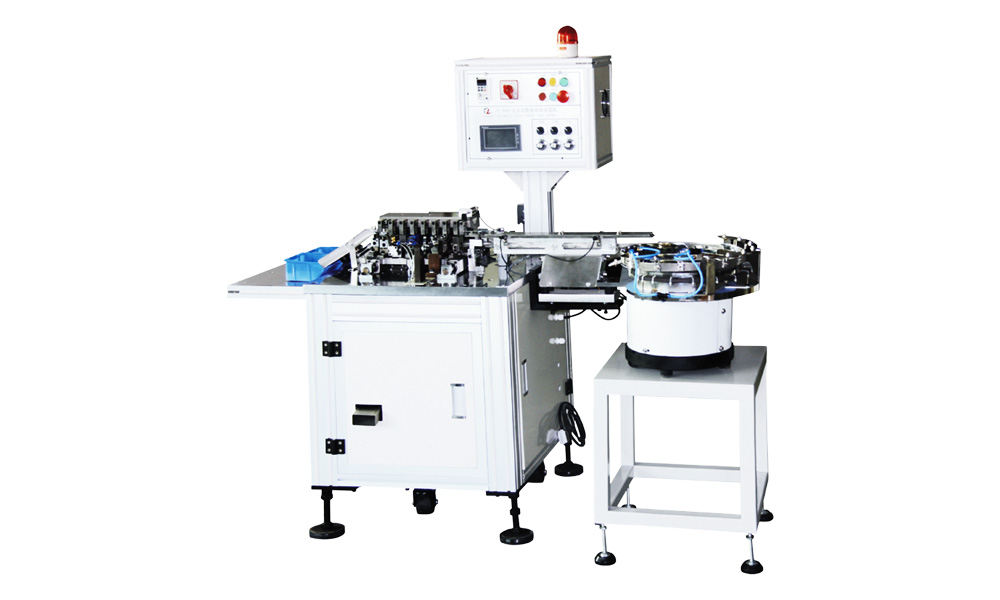
Electronic component forming machines are used to:
- Cut and bend the leads of resistors, diodes, and capacitors to match PCB layouts.
- Automatically feed, measure, and form components from tape, ammo pack, loose bulk, or tube packaging.
- Support both standard forms (e.g., kinked, box-shaped, stand-off) and custom lead geometries for special boards.
In many power supply, charger, adapter, and industrial control board factories, these machines are essential for stable, high-throughput through-hole production.
5.2 Why They Matter to Procurement Managers
Although forming machines are usually owned by production or process engineering, procurement plays a key role in:
- Evaluating equipment suppliers (price, delivery, after-sales support)
- Negotiating service contracts and spare parts
- Aligning machine capabilities with component purchasing strategy
For example:
- If your factory uses an automatic resistor lead forming machine that supports specific lead spacing and tape formats, you’ll want to standardize resistor packaging and pitch across BOMs to leverage automation.
- If you introduce equipment that can handle both axial and radial components with quick changeover, you may be able to consolidate component variants, reduce manual labor, and minimize setup time.
5.3 Key Criteria When Sourcing Forming Equipment
When your company is ready to invest or upgrade, consider:
- Component range: Axial resistors, radial electrolytic capacitors, diodes, LEDs, etc.
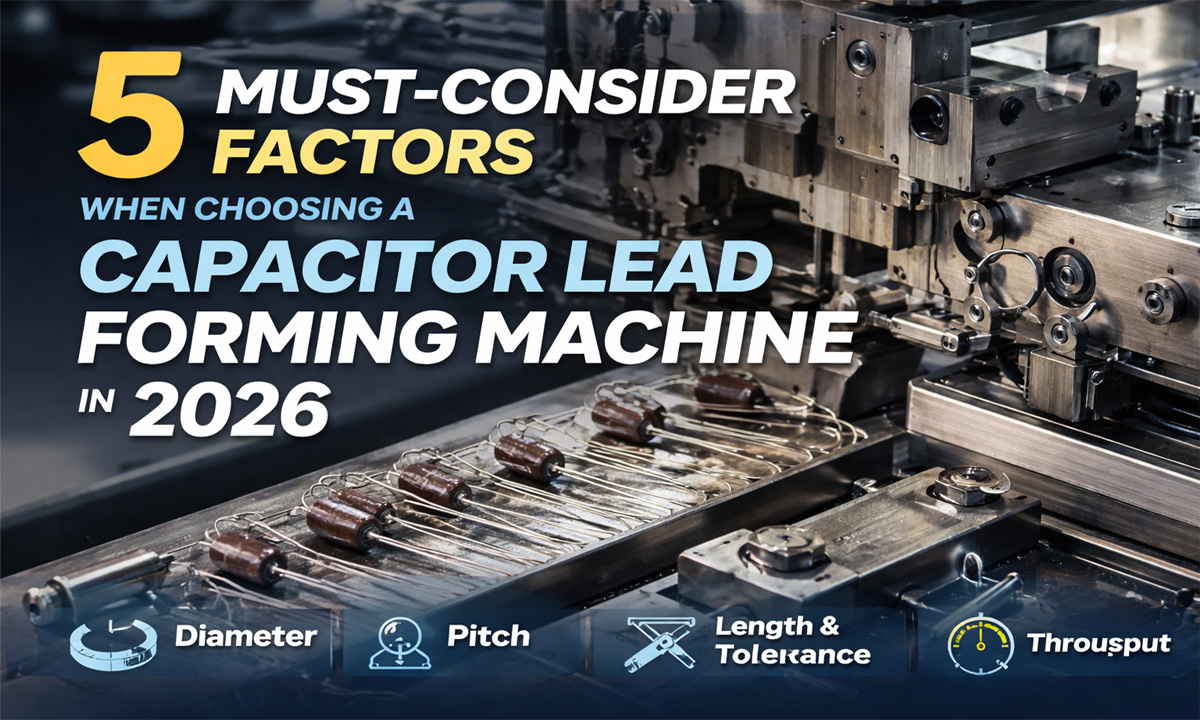
- Precision and repeatability: Lead length tolerance, angle accuracy—these affect insertion quality and solder reliability.
- Throughput: Components per minute and actual effective capacity in your production context.
- Flexibility: Tooling changes, fixture adjustment, support for different tape formats and packaging types.
- Integration: Compatibility with current insertion machines, conveyors, and quality inspection systems.
- After-sales service: Availability of local support, spare parts, preventive maintenance, and training.
By looking at component forming machines and component purchasing as one integrated system, you can often uncover cost savings and quality improvements that are not visible when treating them separately.
6. Practical Checklist for Procurement Managers
To wrap up, here is a quick checklist you can adapt to your own organization:
A. Before Buying Components
- Confirm BOM revision and internal part numbers with engineering.
- Review AVL/APL and clarify mandatory vs. optional parameters.
- Check lifecycle status (active, NRND, EOL) of key ICs and power devices.
- Align component form factors and packaging with existing forming and assembly equipment.
- Identify second sources for high-risk or high-spend parts.
B. When Selecting Suppliers
- Use franchised distributors or manufacturers for critical and safety-related parts.
- Validate quality systems (ISO, automotive standards if needed).
- Evaluate lead times, buffer stock, and consignment/VMI options.
- For brokers, enforce strict incoming inspection and authenticity testing.
C. When Considering Process Equipment (e.g., Forming Machines)
- Map current manual operations that could be automated (lead forming, cutting).
- Estimate labor savings, scrap reduction, and throughput gains.
- Ensure new equipment supports your main component types and packages.
- Coordinate with engineering and production to standardize component specifications.
Conclusion
For purchasing managers, electronic components are more than line items in an ERP system—they are strategic assets that shape product quality, cost, and supply security. Understanding the main component categories, aligning with engineering on detailed requirements, choosing the right sourcing channels, and working with reputable brands are all part of a robust procurement strategy.
At the same time, don’t overlook the impact of electronic component forming machines and other process equipment. By synchronizing your component sourcing with your factory’s automation capabilities, you can reduce manual work, improve consistency, and unlock additional value for your organization.
Used together—smart component sourcing and smart investment in forming and assembly equipment—you can build a more resilient, cost-effective electronics supply chain that supports both current production and future growth.
Share the Post:
Related Posts
20 Years of Expertise, Trusted by Clients Worldwide
The Preferred Choice of Foxconn, BYD, and Huawei