

- Blog
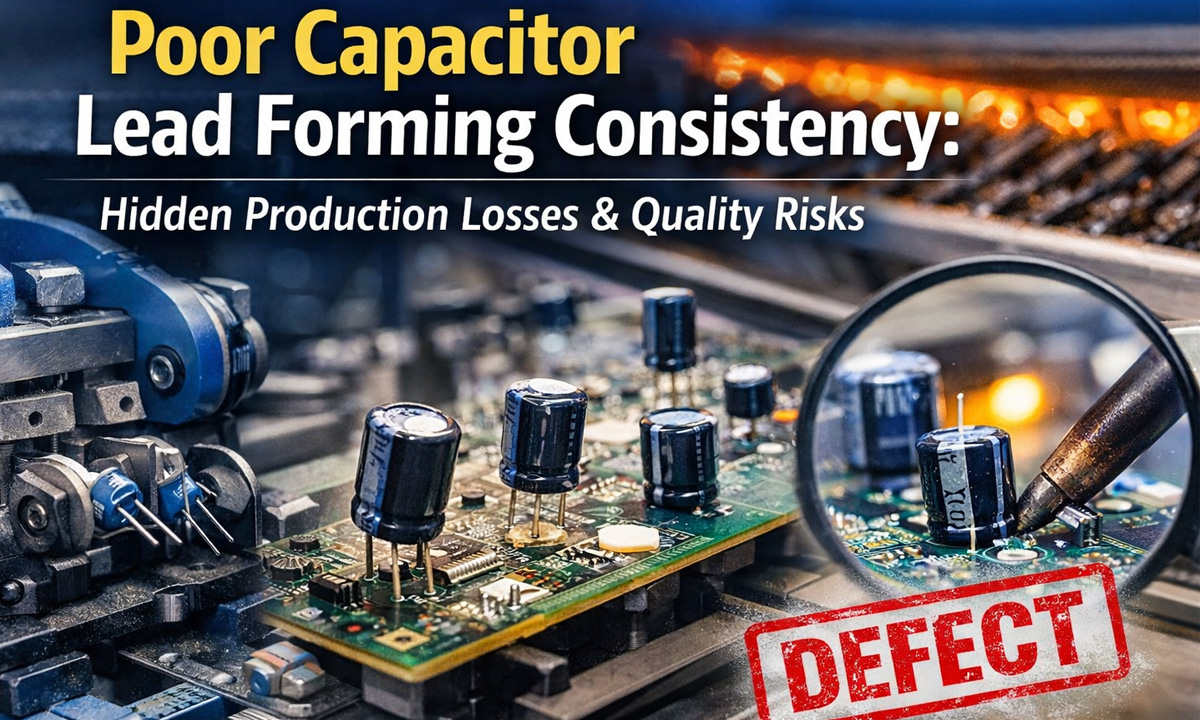
The Hidden Cost of Poor Capacitor Lead Forming Consistency
- By tian81259@gmail.com
If your through-hole capacitor leads don’t come out the same every time—same lead pitch, same bend angle, same cut length, same standoff height—you don’t just “lose a little efficiency.” You create a chain reaction across insertion, soldering, inspection, rework, and even reliability. The result is measurable loss: slower lines, higher defect rates, more scrap, and more warranty risk.
This guide breaks down the real production losses caused by inconsistent capacitor forming—and what most factories do to stop the bleeding.
What “Poor Forming Consistency” Actually Means
In day-to-day production, “inconsistency” usually shows up as:
- Lead pitch drifting (hole-to-hole mismatch)
- Bend angles varying (one leg longer / wider than the other)
- Cut length fluctuating (too long or too short)
- Stand-off height unstable (capacitor body sits too high/low)
- Leads not parallel (twist, skew, “one leg forward”)
Even small variation becomes expensive when you multiply it by thousands of parts per shift.
Loss #1: Slower Insertion and More Line Stops
When lead pitch and parallelism drift, insertion becomes unpredictable:
- Auto-insertion heads miss holes or jam
- Operators spend extra seconds “nudging” parts into PCB holes
- The line pauses more often to clear jams
Shop-floor reality: one jam every few minutes sounds minor, but it can silently kill your effective output. A line rated for speed becomes a line limited by “micro-stoppages.”
Loss #2: Higher Solder Defects at Wave or Selective Solder
Forming inconsistency directly changes how the part sits during soldering:
- Leads too long → excess protrusion, bridging risk, messy fillets
- Leads too short → weak fillet, insufficient barrel fill, poor mechanical strength
- Uneven standoff → unstable thermal behavior; solder wetting becomes inconsistent
- Skewed leads → shadowing effects at wave solder, uneven wetting
These defects don’t just fail inspection—they often pass visually and fail later in vibration or thermal cycling.
Loss #3: Rework and Touch-Up Costs Explode
Inconsistent lead forming increases:
- Hand touch-up time (especially for “almost good” solder joints)
- Rework damage risk (pad lift, overheating, cracked plating)
- Technician load and bottlenecking at QA/rework stations
Rework is the worst kind of cost: it adds labor, delays shipping, and increases the chance of secondary failures.
Loss #4: Component and PCB Scrap Rises (Not Just “Defects”)
Poor forming can physically stress the assembly:
- Forcing a mis-pitched capacitor into holes can crack plating or micro-fracture pads
- Over-bending or off-angle forming can weaken the capacitor lead (fatigue point)
- Misalignment can cause “body contact” or clearance violations—scrapped boards
This is where consistency problems stop being “process issues” and become hard material loss.
Loss #5: Hidden Reliability Risk (Returns, RMAs, Brand Damage)
Even if the board passes functional test, inconsistent forming can create long-term failure modes:
- Leads under stress → creep/fatigue over time
- Marginal solder joints → crack under vibration/heat
- Standoff/lead geometry changes → unpredictable thermal conduction near hot zones
Returns and RMAs are expensive, but the bigger cost is customer confidence—especially in power supplies, industrial control boards, and automotive electronics.
Why It Happens (Common Root Causes)
Most consistency issues come from a handful of sources:
- Wear of cutting blades / forming dies
- Loose fixtures or inconsistent clamping
- Variation in capacitor lead diameter/hardness across suppliers or lots
- Incorrect setup (pitch/length not referenced to a fixed datum)
- Poor maintenance cycle (no replacement threshold)
- Operators “tuning by feel” without measurement standards
How Factories Fix It (Practical, Low-Drama Approach)
1) Lock Down the Critical Forming Specs
Choose 3–4 specs that actually matter for insertion and solder:
- Lead pitch (mm)
- Cut length after forming (mm)
- Standoff height (mm)
- Lead parallelism / symmetry
Then publish a simple check sheet with tolerance ranges.
2) Add a Simple In-Process Sampling Routine
A lot of lines stabilize just by doing:
- First-piece verification after setup
- One sample every X parts / every Y minutes
- Immediate tool adjustment when drift is detected
3) Use the Right Tooling for Repeatability
A purpose-built forming system reduces human variability and holds geometry stable over long runs.
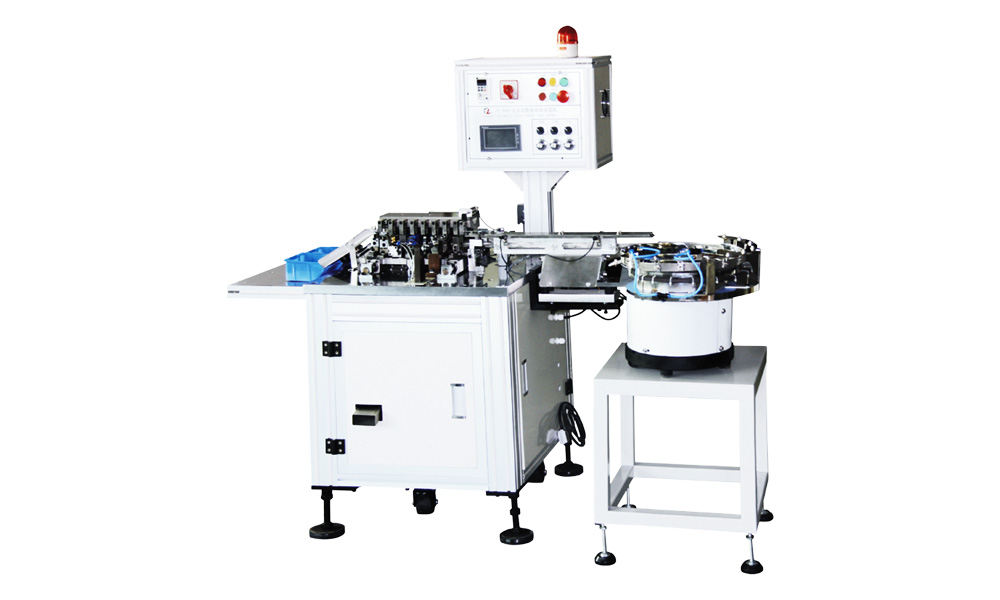
If you’re upgrading or standardizing forming quality, start with a dedicated capacitor forming machine that supports consistent pitch, cut length, and standoff control.
For production lines that specifically need stable lead geometry before insertion (and want fewer jams and solder defects), a dedicated capacitor lead forming machine is typically the most direct quality lever.
4) Prevent Drift With Maintenance Triggers
Don’t wait for defects to spike. Set replacement rules like:
- Blade replacement after X cycles
- Die inspection every shift
- Fixture tightness check daily
- Lubrication schedule
Best practice: treat forming tooling like a consumable that protects your yield.
Quick Self-Check: Are You Losing Money From Forming Inconsistency?
If you answer “yes” to any two, you’re paying for inconsistency right now:
- Operators often “fix” leads by hand before insertion
- You see wave solder bridges or inconsistent fillets on capacitor joints
- QA flags recurring issues like misalignment, skew, or standoff variation
- Auto-insertion jams happen frequently on capacitor stations
- Rework time is rising even though incoming components are “within spec”
FAQ
Does better forming consistency really affect wave solder yield?
Yes. Geometry controls protrusion length, contact time, and wetting behavior. Small variations create big swings in defect rate.
Is the issue usually the capacitor supplier or the forming process?
It can be either, but forming drift (tool wear/setup/fixture) is the most common reason variation grows over time—even with the same capacitor lot.
What’s the fastest way to improve consistency without changing the whole line?
Standardize setup + add first-piece verification + set tooling replacement thresholds. Then automate forming where it’s still unstable.
Bottom Line
Poor capacitor forming consistency doesn’t just “look messy.” It quietly drains output and profit through insertion jams, solder defects, rework labor, scrap, and long-term reliability risk. Fixing it is usually cheaper than you think—because the biggest savings come from stabilizing the process, not chasing defects downstream.
Share the Post:
Related Posts
20 Years of Expertise, Trusted by Clients Worldwide
The Preferred Choice of Foxconn, BYD, and Huawei