
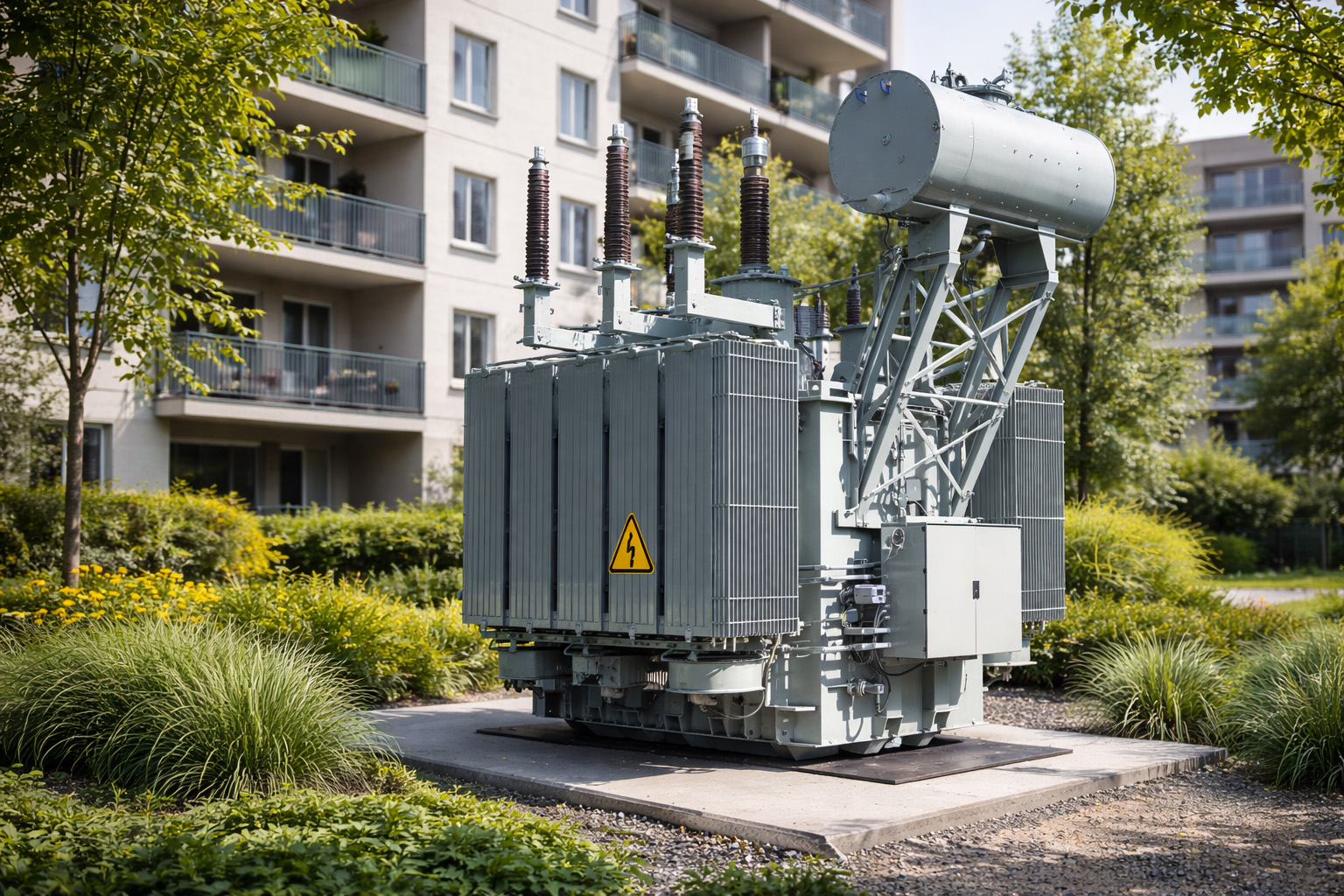
Shenzhen, China — Feb. 1, 2026 — Chinese transformer manufacturers are seeing accelerating demand from Europe and the United States as the global buildout of AI data centers, electrification, and grid modernization collides with a structural shortage of power equipment. The result is a supply chain reality that utilities and developers can’t ignore: without transformers and reliable power delivery, new capacity—especially high-density AI compute—cannot come online.
Recent reporting in China describes a market where some data-center-related transformer orders are booked out through 2027 and U.S. lead times have expanded dramatically. The same coverage cites China’s transformer export value at roughly RMB 64.6 billion in 2025 (about +36% year over year), reflecting how international buyers are diversifying supply sources to keep projects on schedule.
Why transformers are suddenly “hot” in the West
- AI data centers are turning grid access into the gating factor
In the AI era, power is no longer a background utility—it is a primary constraint. S&P Global Market Intelligence (451 Research) projects global data center electricity demand rising from about 860 TWh in 2025 to roughly 1,587 TWh by 2030, driven by hyperscale expansion, AI workloads, and new tenancy models. That surge pulls demand forward for transformers, switchgear, and high-reliability distribution infrastructure. - Grid modernization is accelerating after years of underinvestment
Europe is entering a new power investment cycle as electrification and new loads (including data centers) reverse years of declining demand. Goldman Sachs Research estimates around $3.5 trillion in power-sector investment may be required over the next decade to reduce the risk of an energy shortfall and modernize aging grids. - The U.S. transformer shortage looks structural, not seasonal
On the supply side, the U.S. faces capacity constraints across materials, labor, and manufacturing throughput. Wood Mackenzie estimates supply deficits of 30% for power transformers and 10% for distribution transformers in 2025—numbers that translate directly into longer interconnection timelines, higher project risk, and premium pricing in tight regions.
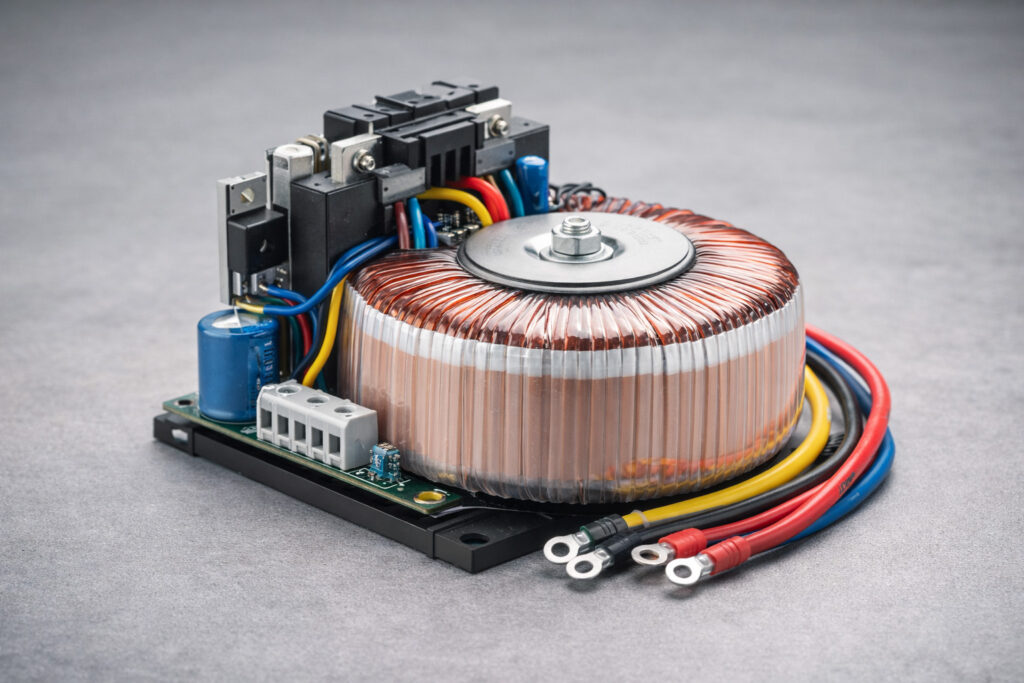
How much power will AI and robotics need next—and why it matters
AI compute scales in clusters. Each additional training or inference deployment often adds load in tens of megawatts, not kilowatts. That drives demand for reliable medium-voltage distribution, high-quality power conversion, and improved voltage stability—because power quality issues can translate into catastrophic downtime or equipment risk.
Robotics amplifies demand through electrification density. Even when factories aren’t adding hyperscale loads, robotics increases the number of servo drives, motor controls, embedded power supplies, and industrial controllers per square meter. More machines, more precision, more uptime expectations—meaning more power electronics and tighter manufacturing tolerances.
The common denominator is that power equipment demand (transformers, substations, switchgear) is now synchronized with a downstream expansion in power electronics: UPS systems, rectifiers/inverters, EV charging modules, and industrial drive systems.
What this means for electronic components in the power chain
Although transformers are “big iron,” they sit upstream of the electronics that actually regulate, protect, and convert power for modern loads. As grids and AI infrastructure scale, demand rises for power semiconductors, passive components, control and protection boards, and thermal stacks.
As power density rises, manufacturers don’t just need more parts—they need more repeatability. That’s where two production steps often become hidden bottlenecks: component lead preparation and thermal assembly.
Where the grid-and-AI boom hits the factory floor: two overlooked bottlenecks
When overseas orders spike and delivery windows tighten, many plants discover that throughput isn’t limited by SMT lines alone. Instead, two “quiet bottlenecks” often determine whether output scales smoothly or collapses into rework:
- Lead preparation for through-hole components (resistors, capacitors, diodes, etc.): manual cutting and bending introduces pitch drift, insertion jams, and wave-solder variability.
- Thermal stack assembly (power device + insulation + heatsink + fastening): inconsistent torque and alignment create thermal hotspots and long-term reliability risk.
Below are two anonymized examples from an EV electronics supply chain—illustrating why many factories upgrade lead forming and heatsink fastening cells early, before expanding the rest of the line.
Case study #1: A Tier-1 EV electronics supplier stabilizes insertion quality during rapid scale-up
A Tier-1 supplier supporting EV power electronics (control boards used in OBC/DC-DC systems and charging infrastructure) faced a ramp-up: more orders, higher audit pressure, and less tolerance for rework. Yet the most persistent instability did not come from the PCB line—it came from manual lead prep on through-hole components.
Before: manual lead prep became a quality and throughput limiter
- Pitch drift and inconsistent lead length caused insertion jams and line stoppages.
- Wave-solder defects increased during peak shifts as operator variability rose.
- Hidden component stress from improper bending showed up later in thermal cycling and reliability tests.
Action: standardize the lead-forming cell first
Rather than redesign the full line, the plant targeted the highest-variance step: lead preparation. They standardized resistor lead forming using the FL-611 bulk horizontal resistor lead forming machine:
https://flourishe.net/product/fl-611-bulk-horizontal-resistor-lead-forming-machine/
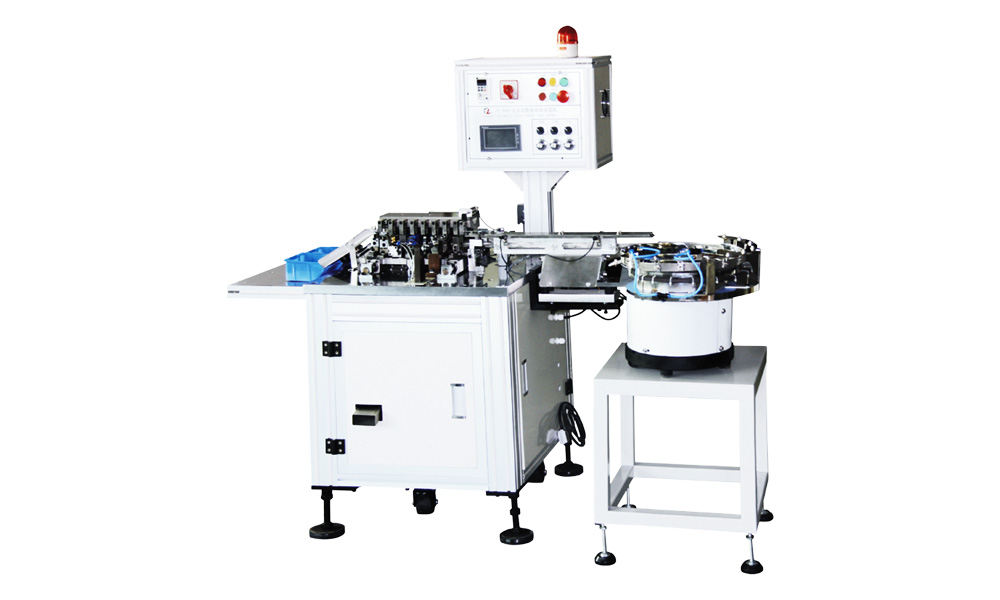
and stabilized high-volume capacitor lead forming with the FL-810 pneumatic bulk capacitor forming machine:
https://flourishe.net/product/fl-810-pneumatic-bulk-capacitor-forming-machine/
After: stability under high-volume pressure
- Fewer insertion interruptions due to more consistent lead geometry.
- Improved wave-solder consistency as pitch/lead-length variance decreased.
- Better shift-to-shift repeatability, supporting smoother audit sampling and delivery planning.
Why it mattered: in power electronics, a small forming variance can become a field reliability risk. Standardized lead geometry is one of the fastest ways to protect yield and delivery commitments when demand surges.
Case study #2: Thermal assembly becomes the reliability line—then gets standardized
(Anonymized customer case; details can be validated by production logs and test reports.)
In a separate EV supply-chain project, the customer assembled power semiconductors onto heatsinks for high-current modules. Early electrical tests passed—but later failure analysis indicated the root cause was assembly variation, not component quality.
Before: inconsistent fastening and alignment drove thermal risk
- Torque variation across operators led to uneven contact pressure.
- Misalignment between device, insulation layer, and heatsink increased thermal resistance.
- Higher rework and burn-in failures emerged as the production ramp intensified.
Action: standardize the thermal stack assembly cell
The plant introduced a dedicated approach to thermal assembly—covering positioning, fastening consistency, and takt-time control. A solution overview is referenced here:
https://flourishe.net/solutions/
For production cells requiring high repeatability at volume, they deployed the FL-915 transistor heatsink locking & forming:
https://flourishe.net/product/fl-915-transistor-heatsink-locking-and-forming-machine/
and in higher-throughput configurations, the FL-916 fully automatic multi-transistor heatsink assembly:
https://flourishe.net/product/fl-916-fully-automatic-multi-transistor-heatsink-assembly-machine/
After: reliability became repeatable—not operator-dependent
- Improved fastening consistency (lower torque dispersion; fewer out-of-spec events).
- More stable thermal contact, reducing hotspot risk under peak load.
- Reduced rework and more predictable takt time, enabling stable delivery planning.
Why it mattered: as AI power density and electrification push thermal limits, repeatable assembly becomes a reliability requirement—not an optional upgrade.
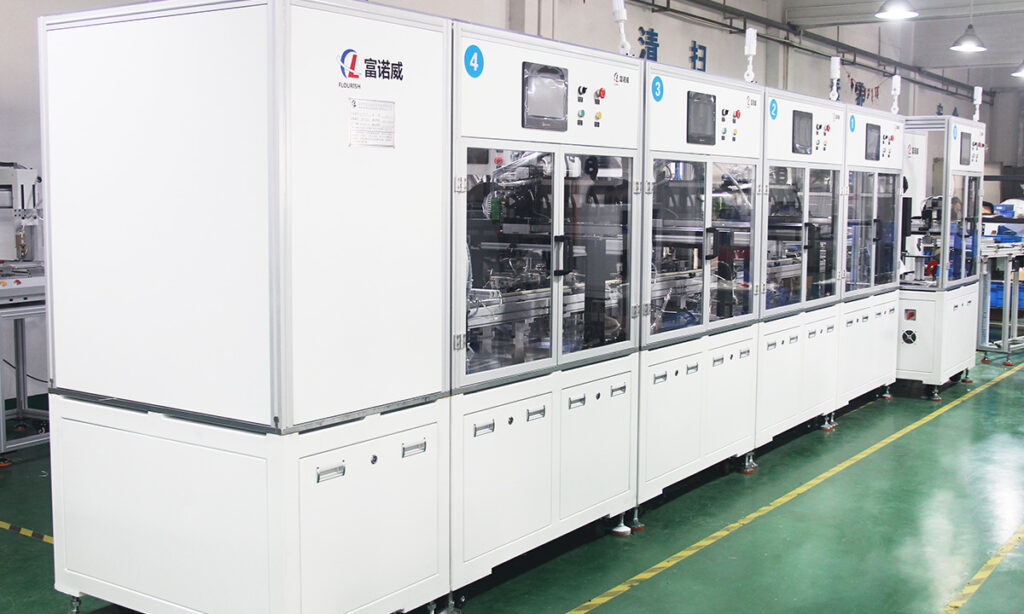
Investment view: what manufacturers evaluate before adding automation
Automation investment is rarely judged by price alone. Most factories model ROI against capacity risk, labor volatility, and defect cost—especially during demand surges when delivery penalties can eclipse equipment cost.
Key cost drivers (CAPEX + OPEX)
- Required takt time (pcs/hour) and shift pattern
- Product mix complexity (changeover frequency, tooling requirements)
- Quality targets (yield, rework tolerance, audit requirements)
- Integration scope (standalone cell vs. line integration, feeders, vision, traceability)
- Maintenance and consumables (spares, routine calibration, wear parts)
ROI logic (simple framework)
- Annual savings = (labor reduction + defect/rework reduction + throughput uplift value) − (maintenance + consumables)
- Payback period = equipment investment ÷ annual savings
In the current transformer and power-electronics upcycle, one ROI lever is increasingly decisive: schedule risk. When component lead prep and thermal assembly become the constraint, automation is not only about reducing labor—it’s about protecting delivery commitments in a market where lead times and equipment availability are already strained.
Bottom line
The surge in transformer demand isn’t just a grid story—it is a manufacturing story. AI data centers and electrification are reshaping the power value chain from upstream equipment to downstream power electronics, increasing the premium on repeatable, high-yield production.
As the world builds more substations, transformers, and high-density compute, the factories supplying control boards and power modules will win by eliminating bottlenecks where variability hides: component lead forming and thermal assembly fastening. The plants that standardize these steps early are typically better positioned to scale output—without scaling defects.
Key sources
- CCTV coverage on backlog/lead times/export context: https://news.cctv.cn/2026/01/31/ARTItXero5oWaZC1SXLVnmPh260131.shtml
- S&P Global data center power forecast: https://www.spglobal.com/energy/en/news-research/latest-news/electric-power/110525-global-data-center-power-demand-expected-to-almost-double-by-2030
- Wood Mackenzie transformer supply deficit estimate: https://www.woodmac.com/press-releases/power-transformers-and-distribution-transformers-will-face-supply-deficits-of-30-and-10-in-2025/
- Goldman Sachs Europe power investment estimate: https://www.goldmansachs.com/insights/articles/europe-needs-3-point-5-trillion-dollars-of-power-investment-through-2035