

- Industry News
Electronic Component Procurement Process: A Step-by-Step Guide from RFQ to Incoming Inspection
- By tian81259@gmail.com
In any electronics manufacturing company, the way you purchase components directly impacts product quality, delivery reliability, and overall cost. A clear, standardized electronic component procurement process helps avoid late deliveries, counterfeit parts, and inventory piles that never get used.
This guide walks through the full electronic component procurement process—from defining requirements to incoming inspection—so purchasing, engineering, and supply chain teams can work from the same playbook. Along the way, you’ll find internal links to related resources and equipment that can streamline your operations.
1. Start with Requirements: Know Exactly What You’re Buying
Professional electronic component procurement never starts with “send me your best price.” It starts with crystal-clear requirements.
1.1 Understand the project and application
Before sending out any RFQs, purchasing should sit down with engineering and product teams to clarify:
- Product type (e.g., chargers, adapters, LED drivers, home appliance control boards, automotive ECUs)
- Operating environment (temperature, humidity, outdoor/indoor, IP rating)
- Certification requirements (CE, UL, KC, CCC, AEC-Q, etc.)
These factors determine the required performance, reliability level, and even which brands or series are acceptable.
1.2 Build a clean, complete BOM
A solid BOM (Bill of Materials) is the core of the entire procurement process. At minimum, it should include:
- Component type: resistor, capacitor, inductor, diode, transistor, MOSFET, IC, connector, etc.
- Key parameters: voltage, current, capacitance, resistance, tolerance, package size, temperature rating
- Brand and part number: preferred original part + acceptable alternates
- Mounting style: SMD vs. through-hole (DIP), height limitations, pad sizes
If your team needs help defining the right parameters for each part, consider building a separate design-stage guide and linking to it internally, such as an Electronic Component Parameter Guide that dives deeper into voltage rating, derating, tolerances, and package selection.
The goal: no vague BOM lines like “R1, resistor, 1k” without tolerance, package, and power rating. The more precise the BOM, the smoother the rest of the process.
2. Supplier Sourcing: Choose Channels Before You Chase Price
Finding the right components is not just about “who is cheapest,” but “who can deliver stable, genuine parts over the long term.”
2.1 Main sourcing channels
- Original manufacturer (OEM) – Best for strategic customers and large volumes.
- Authorized distributors – Reliable quality, traceable supply chain, reasonable inventory and technical support.
- Independent distributors / spot buyers – Useful for urgent orders and obsolete parts, but require strict vetting.
- Online platforms – Ideal for prototyping and low-volume orders; convenient but usually more expensive for volume.
2.2 How to screen suppliers
Key evaluation points:
- Certifications and authorization (original factory authorization, ISO9001, etc.)
- Product focus and line card (do they specialize in key brands you use?)
- Delivery performance (on-time delivery rate, typical lead time)
- Quality system (clear RMA process, documented IQC standards)
- Commercial terms (payment, MOQ, price transparency)
As you develop a preferred supplier list, you can document it in a separate article like a Guide to Electronic Components Sourcing Strategy, helping your whole team align on which suppliers to use first for new projects.
3. RFQ and Quotation Comparison: Look Beyond the Lowest Price
Once your BOM and target suppliers are ready, it’s time to request quotes.
3.1 Send standardized RFQs
For every RFQ, include:
- Full BOM with part numbers, specs, and brands
- Annual and per-batch volume forecast
- Target delivery dates (samples and mass production)
- Preferred or target price (if known)
- Whether alternates are acceptable and under what conditions
A standardized RFQ format makes it easier to compare apples to apples later.
3.2 Compare quotes on multiple dimensions
Don’t just look at the unit price. Evaluate:
- Unit price at different quantity breaks (1k / 5k / 10k / 50k, etc.)
- MOQ (Minimum Order Quantity) and MPQ (Minimum Packaging Quantity)
- Lead time (standard lead time vs. expedited options)
- Payment terms (prepaid, NET 30/60/90, etc.)
- Warranty and liability (return policy, failure analysis support)
4. Samples and Engineering Validation: Let the Lab Decide
Before committing to volume purchases, your engineering team should validate samples under real operating conditions.
4.1 Request samples and documentation
From shortlisted suppliers, request:
- Engineering samples for each key part
- Latest datasheets and application notes
- Compliance certificates (RoHS, REACH, MSDS, etc.)
4.2 Run functional and reliability tests
Engineering should verify:
- Electrical performance in real circuits and worst-case conditions
- Reliability: high/low temperature, humidity, vibration, burn-in, etc.
- Manufacturability: solderability, coplanarity, pick-and-place behavior, through-hole fit
If you’re working heavily with through-hole components (resistors, capacitors, diodes, etc.), now is also the time to confirm mechanical dimensions and lead length are compatible with your automated forming and cutting equipment.
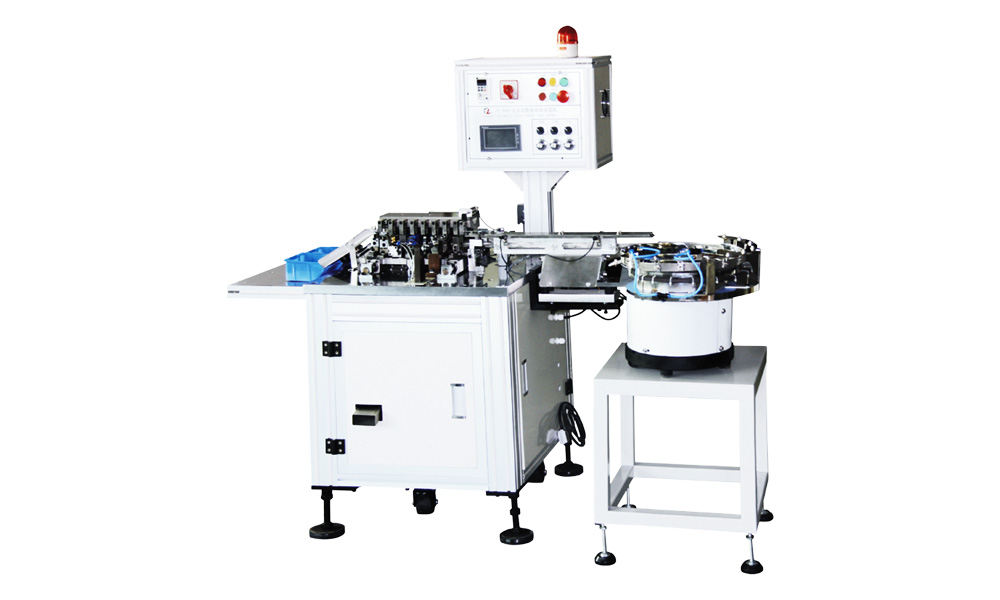
For example, if your production line uses an automatic resistor lead forming machine, you’ll want to ensure the original component packaging and lead dimensions work smoothly with that machine to avoid manual rework.
4.3 Define alternate part rules
Together, purchasing and engineering should document:
- Which parts allow multiple brands or part numbers
- Which parts are “no-substitution” (safety-critical, customer-approved, etc.)
- What process is required to approve any future alternates
5. Purchase Orders and Contracts: Write Risk Control Into the Paper
Once engineering confirms the parts, purchasing can move ahead with contractual agreements.
5.1 Key elements in POs and contracts
- Component details: part number, spec, brand, package, BOM reference
- Quantity and unit price: including tax/without tax, currency, and price breaks
- Delivery terms: INCOTERMS, warehouse address, partial shipments
- Documentation requirements: original labels, batch numbers, CoC/CoA, packing lists
5.2 Quality and warranty clauses
To reduce risk, consider including:
- Clear statement that only new, original, unused parts are accepted (no refurbished or reclaimed parts)
- Minimum warranty period for hidden or batch-level defects
- Processes for returns, replacements, and failure analysis
For strategic long-term components, some companies also sign framework agreements, especially for high-value parts and key power devices.
6. Incoming Inspection (IQC): The Final Gate Before Production
Incoming inspection is the last line of defense before components reach your SMT or DIP lines.
6.1 Basic checks at receiving
- Packaging: intact boxes, tape, reels, trays, and ESD bags
- Labels: part number, brand, lot number, date code, quantity
- Storage indicators: humidity cards, desiccant packs, ESD labels for sensitive parts
6.2 Sampling and testing
IQC should perform:
- Visual inspection: marking clarity, surface condition, bent/oxidized leads
- Dimension checks: lead pitch, overall height, body size (especially for through-hole parts)
- Electrical tests: resistance, capacitance, inductance, breakdown voltage, etc. for sampled units
If any lot fails, the batch should be quarantined and a Non-Conformance Report (NCR) raised immediately.
7. Inventory Management: Avoid Both Stock-Outs and Pile-Ups
Good procurement doesn’t end with placing a PO. It continues into inventory planning and lifecycle management.
7.1 Set safety stock and reorder points
Base your safety stock on:
- Average usage per week or month
- Supplier lead times and variability
- Criticality of the part (can production stop without it?)
For long-lead or high-risk parts, consider buffer stock or vendor-managed inventory (VMI) where possible.
7.2 Manage batches and traceability
- Always store and issue parts by lot/batch number
- Maintain records linking lots to production orders and finished goods
- Use barcodes or QR codes for easier traceability in case of field returns
7.3 Reduce slow-moving and obsolete stock
- Regularly review aging inventory reports
- Work with engineering to redesign in old stock where possible
- Negotiate with suppliers for buy-back or credit when feasible
8. Coordinate Procurement with Production and Automation Equipment
There’s a critical link between what you buy and how you build: your equipment.
If your factory uses automated forming, cutting, and insertion machines for through-hole components, procurement decisions directly affect line efficiency. For example:
- Choosing components supplied in bulk vs. tape-and-reel
- Ordering the correct lead length and body size for automatic forming
- Aligning MOQ/packaging with machine setup times and changeovers
For high-volume power supply, charger, adapter, or home appliance control board production, investing in equipment such as
<a href=”/solutions/electronic-component-forming-machines/”>electronic component forming machines</a> can drastically reduce manual labor, stabilize lead forming quality, and make the entire procurement-to-production flow more predictable.
A detailed Lead Formers Buying Guide can help your procurement team understand which machines fit which product lines, so they can source components and packaging that match your actual production setup.
9. Common Pitfalls in Electronic Component Procurement (and How to Avoid Them)
Even experienced teams can get burned by the same issues over and over. Here are some of the most common pitfalls:
- Chasing the lowest price only
- Fix: Evaluate total cost (quality risk, delivery reliability, warranty, and inventory impact), not just unit price.
- Unclean BOMs and constant changes
- Fix: Align engineering and purchasing on standard specs and approved alternates before sending RFQs.
- Ignoring product lifecycle (EOL) notices
- Fix: Ask suppliers regularly about lifecycle status and plan second-source parts in advance.
- Weak or non-existent IQC
- Fix: Build a formal incoming inspection SOP and train QA to recognize counterfeit or refurbished parts.
- Poor inventory discipline
- Fix: Use safety stock rules, traceability, and regular aging reviews to control both shortages and obsolescence.
Conclusion: Turn Procurement into a Competitive Advantage
A well-designed electronic component procurement process is much more than “send RFQ, compare quotes, place order.” It’s an integrated workflow:
Clear requirements → Qualified suppliers → Structured RFQ → Engineering validation → Solid contracts → Strict IQC → Smart inventory
Share the Post:
Related Posts
20 Years of Expertise, Trusted by Clients Worldwide
The Preferred Choice of Foxconn, BYD, and Huawei