
If your production line still relies on manual heatsink fastening, you already know the pain: inconsistent thermal paste coverage, misaligned insulation sheets, uneven screw locking, and unpredictable output when labor fluctuates.
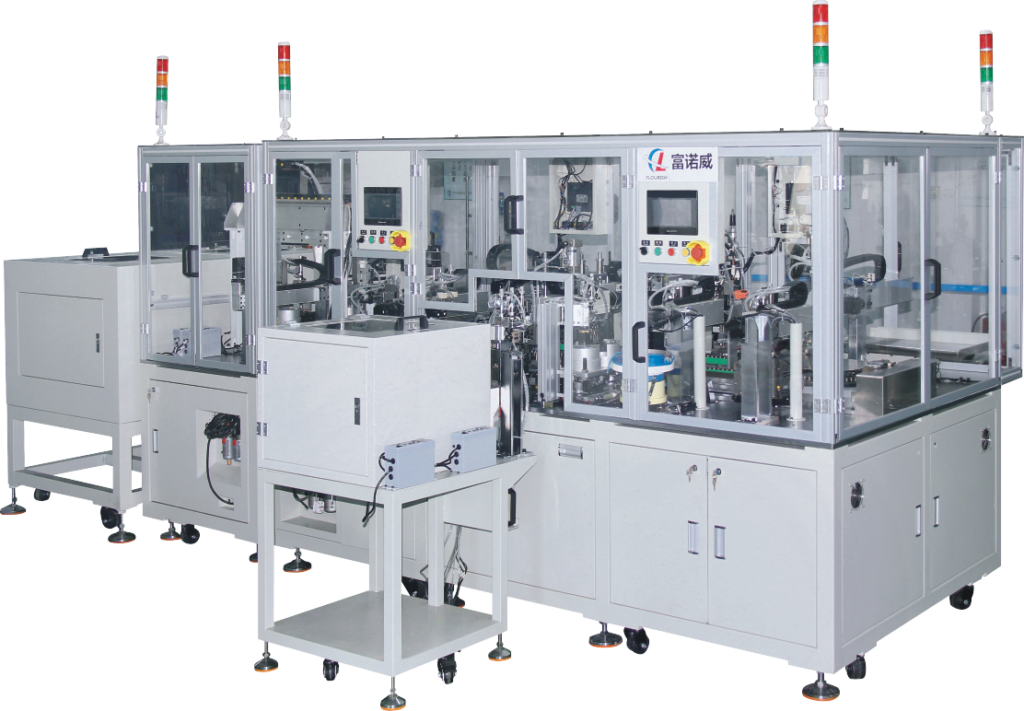
FL-916 is built to automate the critical heatsink assembly steps for power electronics and control-board manufacturing—helping you scale output while keeping assembly quality consistent.
What the FL-916 Does
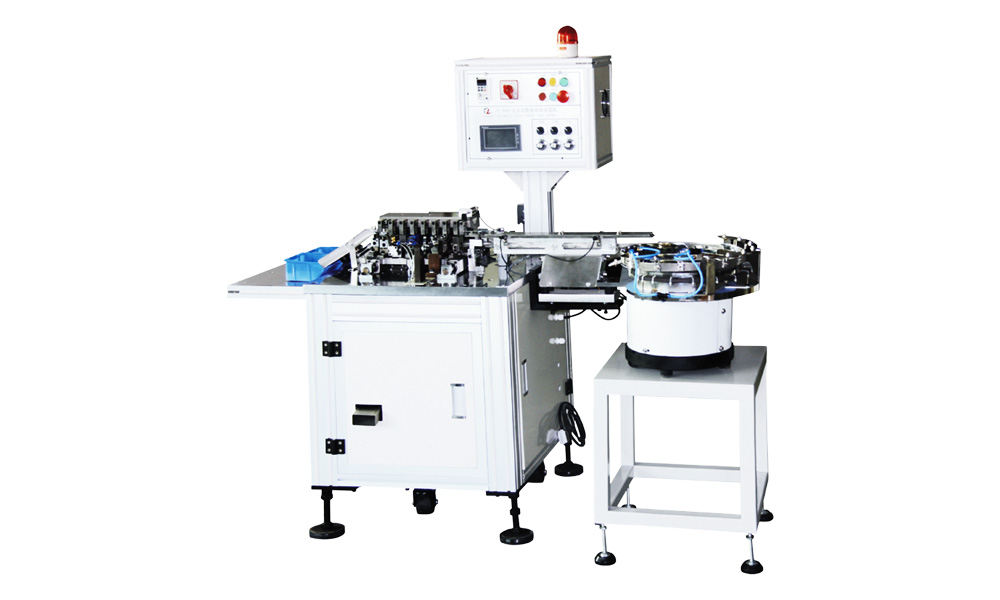
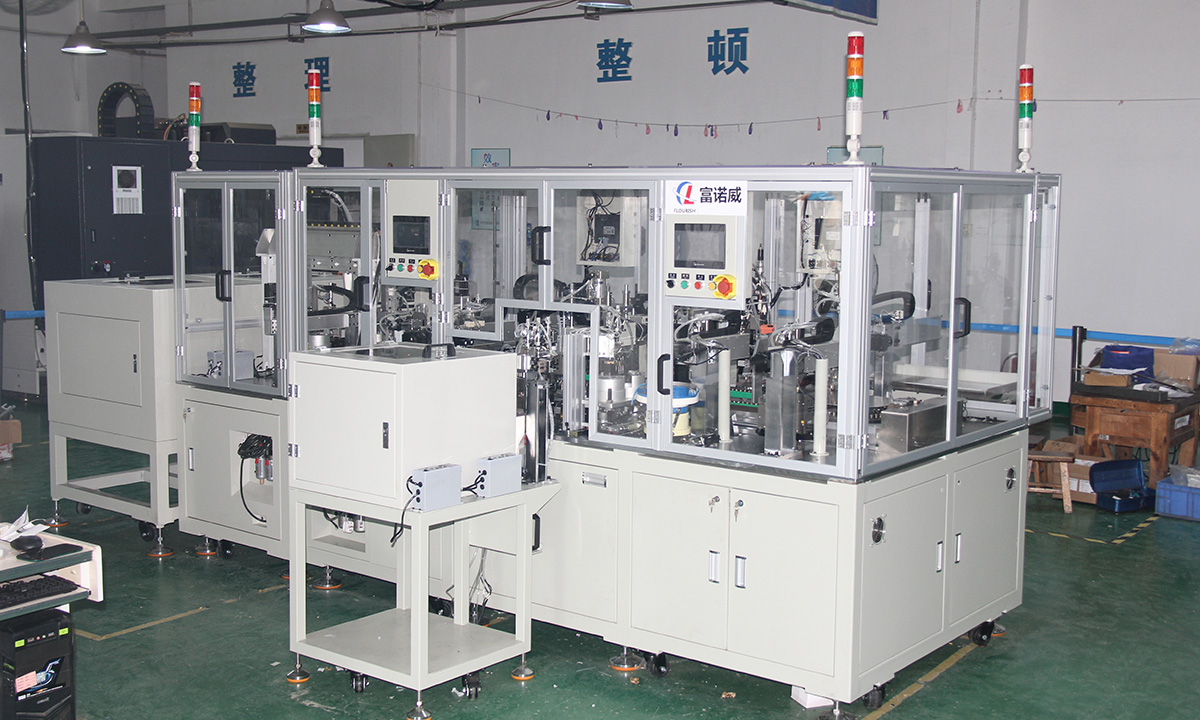
The FL-916 is a fully automatic multi-transistor heatsink assembly machine designed for applications where multiple semiconductors must be mounted onto standard or irregular heatsinks.
Depending on your product design and process configuration, the automated workflow can cover key steps such as:
- Heatsink feeding and positioning
- Thermal paste dispensing / scraping (process-dependent)
- Insulation sheet placement (ceramic / polyimide / other, process-dependent)
- Insulating particles insertion (if required by your design)
- Transistor placement and alignment
- Automatic screw feeding and screw locking
- Transistor pin cutting (as required by the process)
Note: The exact stations and workflow are typically configured based on your heatsink design, transistor package, screw type, and takt-time target.
Why Manufacturers Choose FL-916
1) Higher Throughput for Growing Orders
FL-916 is designed for stable automated production, with a published speed range of approximately 3000–5000 pcs/hour (varies by product and configuration).
This is ideal for factories under pressure to increase daily output without adding headcount.
2) More Consistent Assembly Quality
Manual heatsink assembly is sensitive to operator skill—especially on paste control, insulation sheet placement, and screw locking consistency.
Automation helps standardize these steps to reduce variability and improve yield.
3) Reduced Labor Dependence
Instead of assigning multiple operators across paste, sheet placement, transistor placement, and screw locking, FL-916 consolidates the workflow into an automated line—allowing operators to focus on loading/unloading, quality checks, and upstream/downstream coordination.
4) Process-Driven Customization
Heatsink assemblies differ widely: hole patterns, screw types, insulation materials, transistor packages, and thermal interface requirements.
FL-916 is positioned as a process-matched solution, enabling you to build a line around your real production needs rather than forcing your product to fit a generic machine.
Technical Overview
- Power: 110V / 220V AC, 50Hz / 60Hz
- Dimensions: L4530 × W2840 × H1690 mm
- Speed: Approx. 300–500 pcs/hour (depends on product & configuration)
Typical Applications
FL-916 is commonly used in manufacturing environments such as:
- Power supply products (chargers, adapters, inverters)
- Power modules and energy-related electronics
- Home appliance control boards requiring heatsink assemblies
- Automotive electronics / automotive control systems
- Consumer electronics requiring stable heatsink fastening
What to Consider Before You Buy
Even the right automation upgrade needs planning. Before choosing FL-916, confirm:
- Your required hourly output and target takt time
- Your heatsink design (standard vs irregular), screw type, and hole pattern
- Your insulation material type (sheet / particles) and thermal paste process
- Line integration needs (infeed/outfeed, upstream forming, downstream inspection)
- Operator training and maintenance responsibility inside your factory
FAQ
Is FL-916 suitable for irregular heatsinks?
Yes. Many heatsink projects require non-standard positioning and customized stations. The line is typically configured around your heatsink structure and process requirements.
Can FL-916 handle insulation sheets and thermal paste together?
It can be configured to cover thermal interface steps (paste dispensing/scraping) and insulation sheet placement based on your product BOM and process route.
What affects the real production speed?
Main factors include screw quantity per unit, alignment tolerance requirements, heatsink design complexity, insulation steps, and station configuration.
Do we need training for operators?
Yes. Operators typically need training for HMI operation, material loading/unloading, basic troubleshooting, and maintenance routines.
Request a Quote / Process Evaluation
If you share your heatsink drawing, transistor package type, screw specs, insulation material, and target output, you can match the FL-916 configuration to your real process—and receive a solution proposal aligned with your takt time and quality targets.