
- Industry News
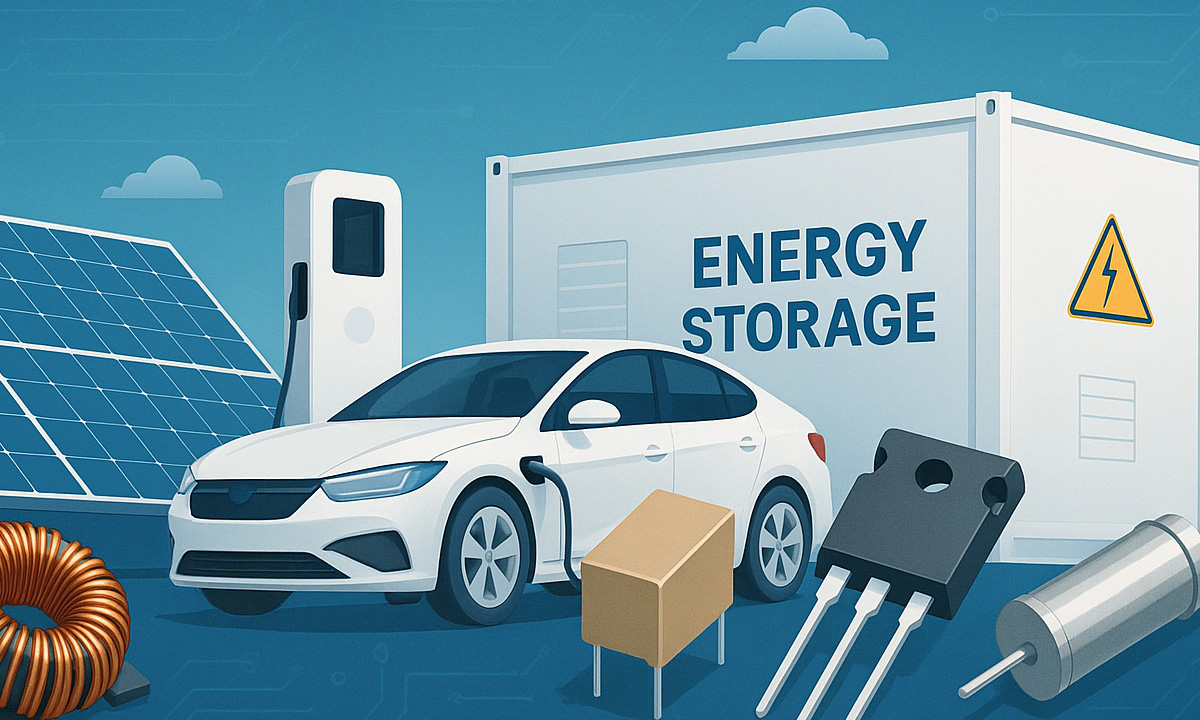
How New Energy and Energy Storage Are Reshaping Demand for Electronic Components
- By tian81259@gmail.com
The global shift toward new energy and large-scale energy storage is not just a story about solar panels, wind turbines, and battery packs. Behind every inverter, EV drivetrain, and battery energy storage system (BESS) sits a dense ecosystem of electronic components that now face far tougher requirements than in traditional power supplies.
According to the International Energy Agency (IEA), global battery storage capacity will need to grow roughly six-fold by 2030 to support the tripling of renewable power and climate goals. ees-europe.com At the same time, BloombergNEF projects that cumulative energy storage additions (excluding pumped hydro) will grow about 12-fold between 2024 and 2035. Utility Dive In parallel, the global EV fleet is on track to quadruple to around 250 million vehicles by 2030 under stated policies.
All of this translates directly into new demand – and new specifications – for resistors, capacitors, power semiconductors, magnetic components, sensors, and interconnects.
Below is a practical, engineering-oriented overview of how the new energy and storage boom is reshaping requirements for electronic components, and what it means for design, procurement, and manufacturing teams.
1. What’s Different About New Energy and Energy Storage Electrically?
Compared with conventional AC-DC power supplies or consumer electronics, new energy and storage systems operate under more extreme and dynamic conditions:
- Higher voltages and power levels
- EV platforms are rapidly moving from 400 V to 800 V architectures.
- Utility-scale PV strings and inverters operate at 1000–1500 V DC.
- Grid-scale BESS systems can reach tens or hundreds of megawatts per site.
- High current and power density
- Fast chargers, traction inverters, and DC-DC converters push continuous high current through busbars, shunts, and power devices.
- Designers target higher power density to reduce size and cost, which drives up thermal and electrical stress on components.
- Bidirectional power flow and frequent cycling
- EVs, home storage, and BESS all involve charging and discharging cycles – often thousands of times over the system lifetime.
- Components must withstand repeated charge/discharge transients, ripple currents, and switching events.
- Harsh operating environments
- EV power electronics face vibration, shock, wide ambient temperatures, and humidity.
- Outdoor PV and storage systems endure daily thermal cycling, dust, pollution, and sometimes salt-fog environments.
- Long lifetime and strict safety expectations
- Utility-scale storage assets are typically modeled for 15–20 years.
- EV components follow automotive-grade standards such as AEC-Q200 (for passives) and ISO-26262 (functional safety).
These realities cascade into a new set of performance, reliability, and manufacturability requirements for electronic components.
2. Key Components Being Redefined by New Energy & Storage
2.1 Power Semiconductors: IGBTs, MOSFETs, and Wide-Bandgap Devices
In new energy and storage systems, power semiconductors are the heart of inverters, converters, and battery interface circuits.
New requirements include:
- Higher blocking voltages (650–1700 V and beyond).
- Fast switching with low losses, especially for SiC MOSFETs in EV and high-efficiency PV inverters.
- Excellent thermal performance and robust packaging to handle high junction temperatures.
- High reliability under repetitive surge currents and fault conditions.
As EV battery demand grows more than fourfold by 2030, driven by vehicle adoption and larger pack sizes, IEA the demand for advanced power semiconductors and gate driver ICs also increases sharply.
2.2 DC-Link, Snubber, and Film Capacitors
Capacitors in new energy systems must handle:
- High DC bus voltages (up to 1500 V).
- Large ripple currents from high-frequency switching.
- Frequent cycling and long lifetime in elevated ambient temperatures.
That means:
- Low ESR and ESL to reduce heating and improve efficiency.
- Improved dielectric materials (e.g., metallized polypropylene or high-grade film) for better self-healing and stability.
- AEC-Q200 or similar qualification for EV on-board chargers (OBC), traction inverters, and DC-DC converters.
2.3 Shunt Resistors and Current Sensing Components
Current measurement is critical in:
- Battery management systems (BMS).
- Inverters and converters for PV and wind.
- DC fast chargers and traction systems.
Key new requirements:
- Low TCR (temperature coefficient of resistance) for accurate measurement over wide temperature ranges.
- High pulse power and overload capability for fault conditions.
- Excellent long-term stability to maintain calibration across thousands of cycles.
Precision metal-element shunts and Kelvin connections are increasingly favored over simple wirewound or thick-film resistors in these applications.
2.4 Contactors, Relays, Fuses, and Connectors
Isolation and protection hardware must now handle:
- Higher DC voltages where arcing is more difficult to extinguish than AC.
- High short-circuit currents from large battery packs and high-power converters.
- Stringent requirements for creepage, clearance, and insulation coordination.
As a result, designers are shifting toward:
- DC-rated contactors with arc blow-out measures and gas-filled chambers.
- High-rupture-capacity (HRC) fuses designed specifically for EVs and BESS.
- Sealed, corrosion-resistant connectors with positive locking for vibration resistance.
2.5 BMS ICs, Sensors, and Communication Components
Modern BESS and EV packs rely on sophisticated electronics to monitor:
- Cell voltage, current, and temperature.
- State of charge (SOC) and state of health (SOH).
- Fault conditions and insulation resistance.
This drives:
- Demand for multi-channel BMS ICs with high-accuracy ADCs and robust isolation.
- More temperature and pressure sensors embedded at module and pack level.
- Communication interfaces (CAN, Ethernet, proprietary links) that are EMC-robust and cyber-secure.
3. Summary Table: Component Roles and New Requirements
Below is a concise overview of how core components are being reshaped by new energy and storage applications.
| Component Type | Typical Role in New Energy / Storage | New Requirements vs. Traditional Power |
|---|---|---|
| Power semiconductors (IGBT, SiC/GaN MOSFET) | Inverters, DC-DC converters, EV traction, OBC | Higher voltage ratings, lower switching loss, high-temperature packaging, automotive/industrial qualification |
| DC-link & film capacitors | Bus stabilization in PV inverters, EV inverters, BESS PCS | Higher ripple current, low ESR, better self-healing, long lifetime at elevated temperature |
| Shunt resistors & current sensors | BMS and inverter current measurement, charger monitoring | Low TCR, high pulse capability, long-term stability, low inductance designs |
| Contactors, relays, fuses | Pack isolation, safety disconnection, fault protection | DC-specific arc control, high breaking capacity, increased creepage/clearance |
| Connectors and busbars | Battery pack interconnects, module connections, power distribution | High current density, vibration resistance, corrosion protection, touch-safe designs |
| BMS ICs & sensors | Cell monitoring, temperature sensing, safety supervision | High accuracy, robust isolation, EMC resistance, fail-safe communication |
Note: Unauthorized disassembly or modification of high-voltage energy storage equipment is extremely dangerous. System design, installation, and maintenance should always be performed by qualified professionals following applicable safety standards and regulations.
4. Reliability and Lifetime: From “Good Enough” to “Mission-Critical”
For consumer power supplies, a 3–5 year lifetime might be acceptable. For a grid-scale BESS or EV platform, that is no longer the case.
- In its World Energy Outlook 2024, the IEA highlights that clean energy infrastructure must operate reliably for decades to meet climate and energy security goals. IEA
- BNEF projects that global energy storage capacity will increase by over an order of magnitude through 2035, reinforcing the need for highly reliable components that minimize downtime and maintenance. Utility Dive
To support this, electronic components must deliver:
- Extended lifetime under derated conditions
- Conservative voltage, current, and temperature derating is essential, especially for capacitors and semiconductors.
- Manufacturers provide lifetime estimation curves (e.g., for film or electrolytic capacitors) that designers must actively use.
- Automotive-grade and industrial-grade qualification
- AEC-Q200 (for passives), AEC-Q101 (for discrete semiconductors), and other standards set baseline expectations for thermal cycling, mechanical shock, and humidity.
- For stationary systems, IEC standards for grid-connected power converters and storage provide additional guidance.
- Consistent mechanical assembly quality
- Solder joint reliability, lead forming geometry, and stress distribution become critical in high-vibration EV or industrial environments.
- Poorly formed component leads can introduce mechanical stress, micro-cracks, or varying creepage distances, directly reducing lifetime.
5. New Requirements for Component Forming and Assembly
As component specifications tighten, the manufacturing and forming process must also evolve. For through-hole components such as resistors, film capacitors, and some power devices used on control boards, lead forming has a direct impact on both electrical performance and reliability.
Key trends include:
- Tighter dimensional tolerances
- Automated assembly lines for new energy power boards require highly consistent lead length, pitch, and bend angles to fit dense PCBs and maintain creepage/clearance at high voltage.
- Automated forming equipment can deliver repeatability far beyond manual processes, which helps reduce rework and solder stress.
- Stress-controlled bending
- Over-bending or sharp radii in capacitor and resistor leads can damage internal structures or weaken solder joints.
- Modern forming machines apply controlled bending profiles to minimize mechanical stress, which is especially important for components operating under thermal cycling in EVs and storage systems.
- Scalable, high-throughput production
- As EV and BESS volumes grow, factories must scale lead forming, cutting, and taping of resistors and capacitors without sacrificing quality.
- Inline forming solutions that integrate with AOI and traceability systems are increasingly adopted.
If you are building boards for PV inverters, EV chargers, or battery storage systems, investing in specialized forming equipment can significantly improve consistency and reduce defect rates. For example, a high-volume resistor lead forming machine can standardize lead length and bend geometry across thousands of parts per hour, which helps maintain consistent creepage distances on high-voltage boards.
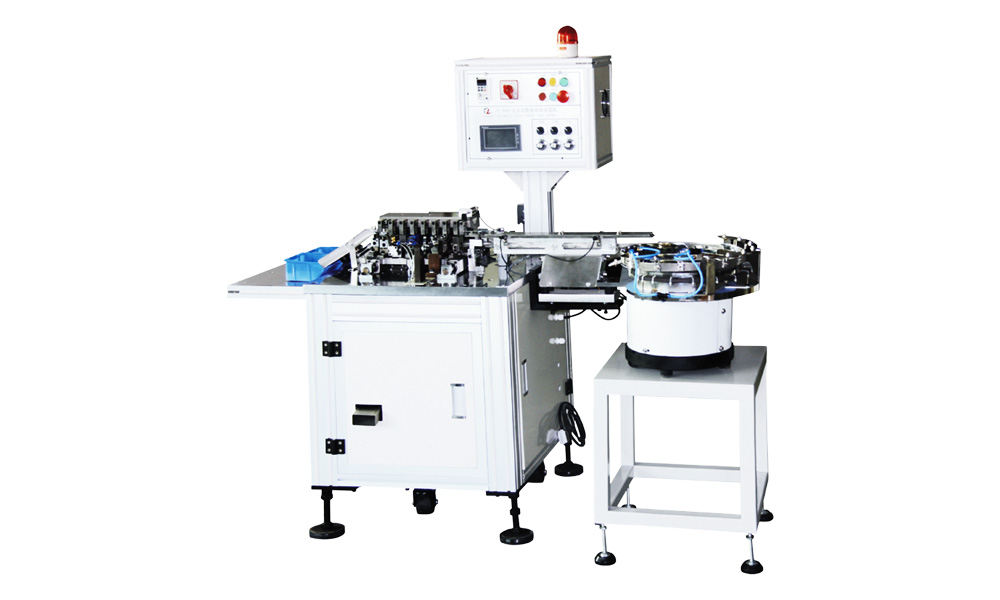
Similarly, a dedicated capacitor lead cutting and forming machine supports stable mounting of film or electrolytic capacitors used in DC-link and snubber positions, lowering the risk of vibration-induced failures in EV and industrial applications.
For manufacturers that supply multiple markets – from chargers and adapters to industrial drives and new energy systems – integrating a full suite of electronic component forming solutions for power and energy applications helps ensure that each product line meets the specific mechanical and reliability requirements of its target market.
6. How Engineering and Procurement Teams Should Respond
To capture the opportunity in the new energy and storage value chain – while managing risk – design and sourcing teams can take a few practical steps:
- Design with new energy use cases in mind from day one
- Start with the target application’s lifetime (e.g., 15–20 years for BESS, 8–15 years for EV power electronics) and work backwards on derating and stress profiles.
- Avoid simply “recycling” component selections from legacy industrial or consumer designs.
- Upgrade component qualification criteria
- Require relevant automotive/industrial certifications (e.g., AEC-Q, IEC, UL) for critical components.
- Make reliability reports, accelerated life test data, and field failure statistics part of supplier evaluation.
- Collaborate closely with component and equipment suppliers
- Engage with resistor, capacitor, and semiconductor vendors early to understand their roadmaps for higher voltage, higher temperature, and wide-bandgap-optimized components.
- Work with forming and automation equipment suppliers to optimize PCB layout, lead forming parameters, and assembly flow.
- Plan for scalability and standardization
- Standardize component platforms (e.g., DC-link capacitor families, shunt resistor series) across product lines where feasible to simplify qualification, stocking, and cost control.
- Invest in scalable forming and assembly equipment that can handle growing volumes without sacrificing quality metrics like first-pass yield and field failure rate.
7. Conclusion: The Energy Transition Is a Component-Level Revolution
The rapid expansion of EVs, renewables, and energy storage is often discussed in terms of gigawatts and megawatt-hours. But behind those big numbers lies a quiet revolution at the component level. Power semiconductors must handle higher voltages and temperatures; capacitors and resistors must endure more stress for longer; connectors, sensors, and BMS ICs must guarantee safety and visibility in increasingly complex systems.
As global analysts forecast multi-fold growth in battery storage and electric mobility over the next decade, Utility Dive+1 the manufacturers that will win are those who treat electronic components not as commodities, but as strategic assets. That means tighter collaboration between design, procurement, and manufacturing – and a renewed focus on high-quality, automation-ready components and forming solutions that are truly designed for the new energy era.
Share the Post:
Related Posts
20 Years of Expertise, Trusted by Clients Worldwide
The Preferred Choice of Foxconn, BYD, and Huawei